Samsung Leejung Women's Clinic Doctor's Column
Obstetrics & Gynecology Column

Can Menopause Hormone Therapy Be Taken Safely Without Raising Breast Cancer Risk?

The causes of menopausal symptoms, the breast cancer risk linked to hormone therapy, and how to manage treatment safely.

Published 2026-10-14 Updated 2026-10-14 Reviewed by Hyejeong Lee, Medical Director · Obstetrics & Gynecology Specialist

Menopause is a change that most women in their 40s and 50s go through as female hormones decline, but if it is left unmanaged it can lead to complications such as osteoporosis and metabolic syndrome, so it needs care. Hormone therapy is not a treatment to be avoided outright because of breast cancer risk; when the ingredients and dose are adjusted to the individual, it can be used safely. This article looks at the changes in the body, the evidence behind treatment and the criteria used for prescribing.

01

What changes happen in the body during menopause?

Key point
Menopause is the stage of life in which falling levels of oestrogen bring wide-ranging changes that affect temperature regulation, sleep, the vaginal mucosa, and the metabolism of bone and blood vessels. Even when the symptoms feel mild, that alone is not a reason to assume that no care is needed.

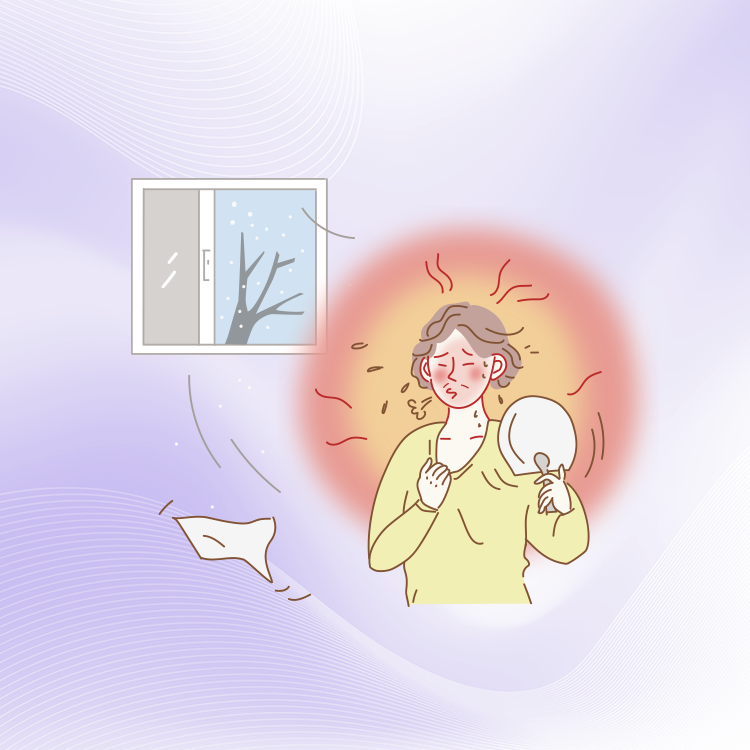
Falling oestrogen makes the body's temperature-regulating centre unstable, causing hot flushes and night sweats, and it also affects the regulation of melatonin and serotonin, which in many cases leads to sleep problems. When the environment of the vaginal mucosa breaks down, vaginal dryness and pain during intercourse can also appear, and a considerable number of women experience discomfort in daily life.

Oestrogen is also involved in muscle and joint metabolism, so when its level falls the risk of osteoporosis rises. Blood vessels, lipid metabolism and blood pressure control are unsettled as well, and the risk of complications such as arteriosclerosis and metabolic syndrome grows with them. Even women without symptoms are advised to begin menopause care for the sake of their health.

  • Hot flushes and night sweats — caused by reduced function of the temperature-regulating centre
  • Sleep problems — become more frequent as melatonin and serotonin regulation becomes unstable
  • Risk of osteoporosis and metabolic syndrome — rises as bone and blood vessel metabolism is unsettled
Anatomy illustration related to Can Menopause Hormone Therapy Be Taken Safely Without Raising Breast Cancer Risk?
02

Is it true that hormone therapy raises the risk of breast cancer?

Key point
It is true that hormone therapy is not unrelated to breast cancer risk, but the risk is not absolute. Which ingredients are used, in what combination and for how long all affect the overall level of risk, and adjusting these factors can lower it.

The concern is not without basis, because oestrogen acts as a growth signal for breast tissue and can lead to cellular changes, but the actual research findings are not simple. A paper by the Korean Society of Clinical Health Promotion, listed in the KCI database of the National Research Foundation of Korea, compared 119 late-postmenopausal women receiving hormone therapy with 109 receiving non-hormonal treatment. The hormone therapy group showed more positive results on two measures: attitudes towards menopause and ageing, and quality of life.

However, hormone use must be restricted in women who are being treated for breast cancer or have a past history of it, and in those with vaginal bleeding caused by changes in the endometrium. The key is therefore to check first for any reason to restrict treatment, and then to prescribe with the ingredients and dose adjusted to the individual.

03

What tests and criteria are used before starting treatment?

Key point
Menopause treatment is not prescribed on symptoms alone. The principle is to check everything from blood pressure and blood tests through to uterine and breast ultrasound, and then choose a medication that fits the patient's age and the length of time that has passed since menopause.

A comprehensive examination and assessment is a step that must come before treatment: blood pressure, urine and blood tests, as well as uterine and breast ultrasound, are carried out so that a suitable medication can be chosen. Because hormone therapy helps prevent bone loss, it is an appropriate first-line treatment for women aged 60 or under whose fracture risk has increased.

For women over 60 who are 10 or more years past menopause, the situation is different: using hormones solely to prevent fractures is not recommended, and other ingredients should be used in view of the risk of blood clots or stroke. Symptoms rarely appear in just one form, so treatment has to be designed around each individual.

  • Blood pressure, urine and blood tests — the basic tests for understanding overall health
  • Uterine and breast ultrasound — an essential check before hormone therapy
  • Lifestyle and medical history — the reason prescriptions differ from person to person
04

Besides medication, what should be managed in daily life?

Key point
During menopause, the way daily life is managed affects symptoms and recovery just as much as medication does. Paying attention to protein and calcium intake, giving up alcohol and keeping up a habit of regular exercise, all alongside treatment, is how the effect of that treatment can be improved.

Including enough protein and calcium in the everyday diet helps preserve muscle mass and bone density, while alcohol upsets hormonal balance, so it is better avoided during menopause. A habit of resting enough or exercising regularly about 2 times a week can help on its own.

Two things need to be remembered in order to pass through menopause without strain and continue into a healthy later life: choosing medication suited to one's state of health, and making lifestyle changes alongside it. Women who make lifestyle changes alongside treatment recover more quickly.

Hyejeong Lee, Medical Director
Doctor's view

How the doctor decides

Hyejeong Lee, Medical Director · Obstetrics & Gynecology Specialist

I look at risk factors first, even without symptoms

Even when a patient does not feel strong symptoms, I first look at her age, the time since menopause, bone density and metabolic markers. Changes inside the body can be confirmed through tests, so I do not tell patients that care is unnecessary just because their discomfort is mild.

I neither push hormone therapy nor rule it out unconditionally

I do not tell patients to avoid it outright because of breast cancer risk, nor to start it unconditionally to ease symptoms. I first check whether there is a reason to restrict it, and if there is none, I prescribe with the ingredients, dose and duration adjusted to the individual.

I consider age together with time since menopause

Depending on whether a patient is 60 or under and whether 10 years have passed since menopause, I take a different approach even when the treatment has the same purpose. I do not set a prescription by age alone; I also look at how long it has been since menopause.

I address lifestyle changes along with the prescription

I do not stop at prescribing medication; I also go over diet, drinking and exercise habits with patients. I believe that when lifestyle changes go hand in hand with treatment, patients can move through menopause more steadily.

Summary

In summary

Menopause is a natural change, but if it is left unmanaged it can lead to complications such as osteoporosis and metabolic syndrome. Hormone therapy is not a treatment to be avoided outright because of breast cancer risk; when it is adjusted to test results, it can be used safely. If symptoms keep returning, it is a good idea to start with a check-up.

FAQ

Frequently asked questions

QDoes hormone therapy really cause breast cancer?
A

It is not unrelated, but that does not mean the risk simply increases. Adjusting the ingredients and dose to suit the individual can lower the risk.

QAt what age should menopause care begin?
A

Menstruation usually ends and menopause begins in the 40s to 50s, but it is a good idea to start care as part of a check-up even without symptoms.

QIs hormone therapy no longer possible after 60?
A

It is still possible, but the purpose changes. After 60, once 10 years have passed since menopause, using it solely to prevent fractures is not recommended.

QWhat tests are done at the clinic for menopausal symptoms?
A

Your condition is checked with blood pressure, urine and blood tests along with uterine and breast ultrasound, and the direction of treatment is decided taking your lifestyle into account as well.

Hyejeong Lee, Medical Director
Medical review
Hyejeong Lee, Medical Director · Obstetrics & Gynecology Specialist
This content is general medical information and may not apply to every individual. Diagnosis and treatment are decided through a consultation.