After a pregnancy is confirmed, one of the things many expectant mothers most want to know is the baby's sex. Seeing the anatomy directly on ultrasound means waiting until 16 to 20 weeks of pregnancy, but the Genoo test, which analyses fragments of fetal DNA in the mother's blood, now makes it possible to check the sex from 6 weeks onward.
The Genoo test is a non-invasive test that determines sex by whether a Y chromosome is detected in the blood. Its accuracy reaches 99%, but depending on the timing and on whether more than one baby is on the way, it is not 100 percent certain. Below are the principle behind the test, its accuracy and the points to keep in mind.
How does the Genoo test identify the baby's sex?
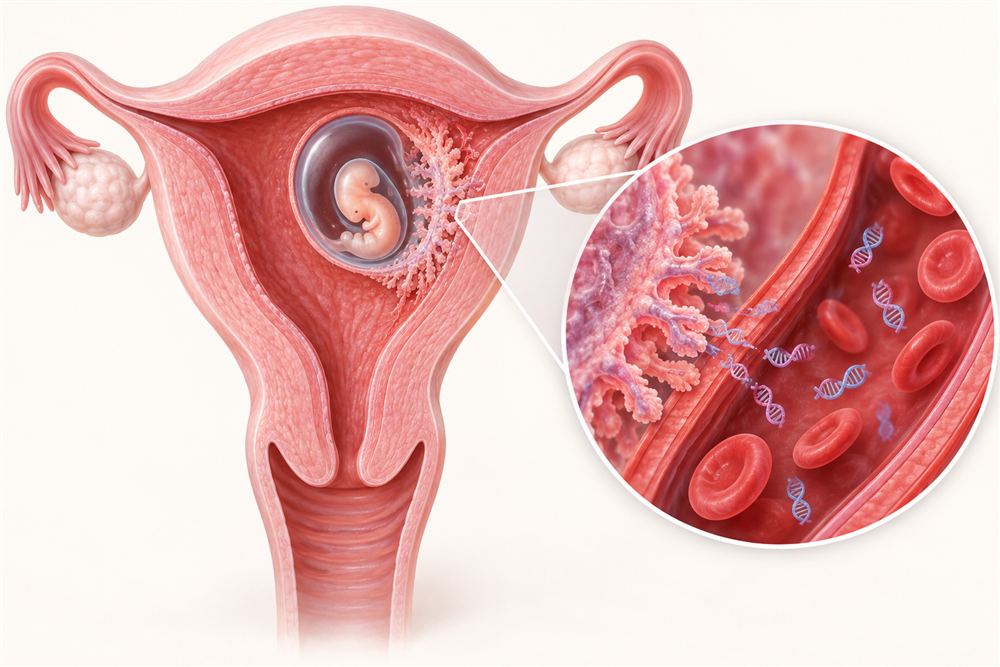
The Genoo test determines sex from fetal DNA in the mother's blood. As the pregnancy advances, enough DNA is present for the test to be done from a blood sample alone, without any procedure.
The core principle is simple: if a Y chromosome is detected in the mother's blood, the baby is judged to be a boy, and if it is not detected, a girl.
When and how can the Genoo test be done?
A beta-hCG blood test confirms whether you are pregnant, with results available on the same day in 15 to 20 minutes. The schedule is then set with ultrasound and further tests.
From 6 weeks of pregnancy, enough fetal DNA circulates in the blood, so the Genoo test is recommended from that point. It needs only a blood draw from the arm, with no anaesthesia and no procedure.
- Beta — hCG test — measures pregnancy hormone in the blood and confirms pregnancy on the same day within 15 to 20 minutes
- After 6 weeks of pregnancy — fragments of fetal DNA circulate sufficiently in the mother's blood, so the accuracy of the test rises
- Blood sampling — no needle enters the uterus; the test is done with a blood draw from the arm alone
How accurate is the Genoo test?
Because it analyses blood, the Genoo test is highly accurate, but not 100 percent. If it is taken earlier than the recommended 6 weeks, the amount of fetal DNA may be too small and accuracy can fall.
In a multiple pregnancy, the test only shows whether a Y chromosome is present, so telling each baby's sex apart is difficult. Outside such special situations, results are rarely reversed.
- Timing — taken earlier than 6 weeks, the amount of fetal DNA may be insufficient and accuracy can drop
- Multiple pregnancy — the test can only show whether at least 1 of the babies carries a Y chromosome, which makes individual results complicated
- Level of accuracy — as a blood-analysis test it reaches 99% accuracy, but it is not 100 percent certain

How does it differ from ultrasound and amniocentesis?
Confirming the sex visually on ultrasound requires reaching 16 to 20 weeks of pregnancy, and accuracy can fall depending on the baby's position and the clarity of the image.
Many expectant mothers feel anxious about amniocentesis, in which a needle is inserted directly, whereas the Genoo test involves only drawing blood from the arm, so the burden is much lighter.
- Ultrasound — the sex can be seen directly only from 16 to 20 weeks of pregnancy, and accuracy varies with the baby's position
- Amniocentesis — a needle is inserted into the uterus, which can bring a heavy burden and anxiety
- Genoo test — needs only a blood sample and can be done non-invasively from 6 weeks of pregnancy